
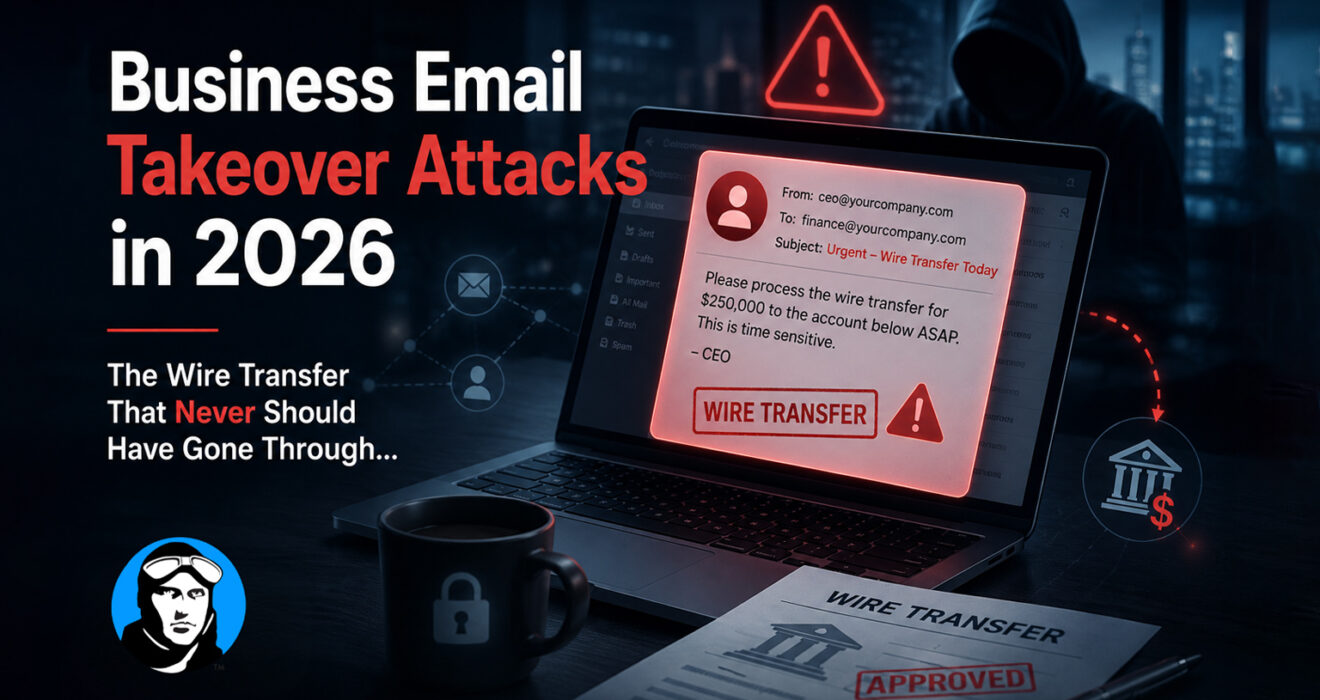
The Wire Transfer That Never Should Have Gone Through
Inside a Business Email Takeover, and Why “It Looked Legitimate” No Longer Holds Up
It’s 4:40 on a Friday. The controller gets an email already sitting in an existing thread about a vendor payment, asking her to update banking details before the weekend. The tone matches. The signature matches. It even references a call that actually happened earlier in the week.
She makes the change. The payment goes out Monday morning. By Tuesday, the real vendor is asking where their money is.
Nothing about that email would have tripped a spam filter. There was no sketchy link, no attachment, no obvious red flag, because there wasn’t supposed to be one. This is a Business Email Takeover, and the reason it works is that it doesn’t look like an attack. It looks like Tuesday.
How It Actually Happens
An attacker either gets into a real email account or gets good enough at impersonating someone that it doesn’t much matter which. Either way, they don’t strike immediately. They watch first: who approves what, how executives phrase things, when invoices typically go out. Then they wait for a moment where a request like this would be unremarkable, and they send it.
Why This Works So Much Better Than It Used To
Three shifts explain most of the increase. AI has made it trivial to match someone’s writing style and reference real, ongoing projects, erasing the grammar-and-tone tells people used to rely on. Cloud email lets an attacker inside an account reply directly inside an existing thread rather than starting a suspicious new one. And modern payment rails move money fast enough that by the time anyone double-checks, the transfer has already cleared.
The Industries Feeling This First
Law firms managing escrow accounts, healthcare practices juggling vendors and payroll, manufacturers with layered supply chains, schools and nonprofits running lean IT teams: anywhere money moves regularly between people who don’t see each other in person, this scam finds room to work. Attackers are patient; some wait weeks before making the ask, specifically so it feels routine rather than urgent.
Why the Usual Defenses Miss It
Spam filters and link scanners are built to catch obvious phishing. A BET email typically has neither a bad link nor an attachment, so it sails past exactly the tools most businesses lean on. What actually catches it is different: visibility into unusual login behavior, a verification step for any request involving money or sensitive data, and training that covers this specific pattern rather than the outdated “check for typos” advice.
What’s Worth Doing About It
- Enforce MFA correctly: not just turned on, but configured so it can’t be bypassed.
- Require a second channel, a phone call rather than a reply-all, to verify any change to payment or banking details.
- Watch login activity for anything geographically or behaviorally off.
None of this slows the business down in any way that matters. What it prevents is a single email turning into a six-figure mistake nobody saw coming.
ACE Technology Group works with clients to close exactly this gap: identity protection, login monitoring, and the verification processes that make “it looked legitimate” stop being a good enough reason to click send.
Business Email Security Starts with Better Protection.
Today’s most damaging email attacks don’t look suspicious; they look legitimate. ACE Technology Group helps businesses strengthen email security with identity protection, login monitoring, and practical safeguards that stop Business Email Takeover attacks before they become costly mistakes.